

bookseller's log: may
morning routines, digital gardening, AI, and Nazis.

On a rickety balcony in Louisville, KY a woman begins her morning routine. She wakes, she makes coffee, she grabs a book, and she settles in on the porch. She finishes three books in a week in this way. She downloads the bird identification app that is rising in popularity among her friends and hopes to capture a mourning dove, she does.

2022 was a rough year for me, my self worth had been attached to my ability to bring home an income for too long and I couldn’t find the energy I needed to make the bookstore flourish. Every routine I attempted to build felt like a cage and I a feral animal gnawing at the bars.
A few years of therapy later and it’s not even my therapist that helped me establish a routine. She did a ton of the heavy lifting, certainly. Without her I wouldn’t have understood why routine and consistency repelled me despite my lifelong craving for it, my insistence on it being the solution to all my problems. It wasn’t until a few weeks ago when I was reading Petya Grady’s A Reading Life that something finally clicked:
Letting structure be scaffolding, not a cage.
Scaffolding: to provide support, to make the living easier. The impermanence of scaffolding suggests that the routine can shift, that it can flow from what is needed at the time. She continues,
Whenever I feel time-poor, my perfectionism sharpens.
To feel time-poor: to experience or perceive a contraction of time despite its constancy. The familiarity sparkles, I can feel areas of my brain light up as I read that line, “YES, That’s it!” I do not have time! I am running late for something. I am missing out, I am behind, I will never catch up. Unless. What if I “get my shit together”? What if I tighten up? What if I put my phone away? What if I exert a level of control over all areas of my life? Surely that will work this time!
Instead of restriction, control, perfection, and consistency I’m trying reflection, curiosity, flexibility, even some grace! What a revelation!

And so this is how I arrived at my morning routine. It works for me, for now.
digital gardening: the art of taking notes
I’ve watched Anna Howard’s video on digital gardening three times now. I have been trying to broaden the horizons of my Youtube algorithm. In between Smosh compilations and smooth jazz vinyl sessions, I wanted to find folks who were thinking and more importantly sharing their thoughts. On my first watch of Anna’s video I was intrigued, I loved the idea of note-taking and being able to see how my thoughts connect or pick out the themes I return to again and again. My brain is a tumble of thoughts at any given point and I want to build a habit of record keeping, archiving, having my thoughts live outside my mind so that I can revisit them. Maybe one day I’ll even create something from them.
A month passed and I spent most of May feeling angry and panicked over the use and abuse of ChatGPT by students and the population at large. I worry that we are relinquishing our agency to save ourselves some time. If we do not want to attend to the arduous task of learning, of thinking, comprehending, formulating opinions, then how do we maintain our agency? It is easier, which is to say faster, to let someone—something—do the work for us. We feel time-poor and so we cut out the pesky, time-consuming struggle of using our brains. People are not considering who holds the keys to these platforms and what they may gain with our loss.
I revisited Anna’s video and then watched it a third time to take notes and set up my own digital garden. Two months in the making and this hobby may take another few months to really pick up. I have a list of books, shows, and movies I’d like to take notes on. I am waiting to see where this hobby will fit into my routine instead of forcing myself into it. Thankfully, I have plenty of time.
a book reflection: They Thought They Were Free
My therapist, Erin, and I have moved our sessions to every 6 weeks instead of every 4 weeks, a sign that I’ve hit a stride; that I’m feeling good. Erin says that we cannot always be growing, that sometimes we reach a plateau. Somewhere in my childhood I picked up the idea of a plateau as boring, maybe even a negative thing despite its neutrality. Now it feels like I’ve reached an expanse of flat land, covered in wildflowers, impossibly lush. The grass moves in waves, and the sun warms my skin. My peace, once visualized, appears as a Ghibli movie.
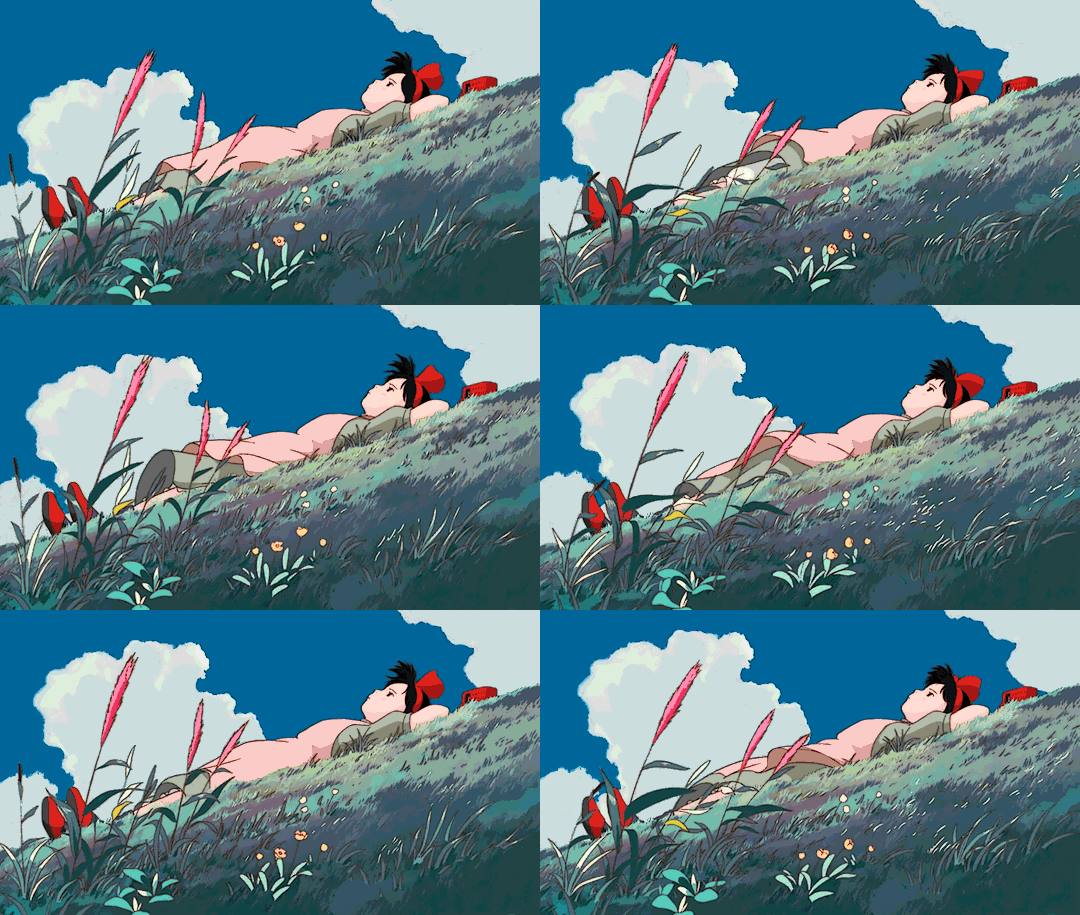
I have to enjoy the living rather than the analysis of it, for now.
I am resisting the urge to prove my moral clarity. I wave my hands, “wait, wait wait!” I want to insist that I am keeping up with the news, that I have all the correct political opinions. I must acknowledge what a privilege it is to have a good life, I must show that I do not take it lightly. I am grateful and aware of my luck. Please let me justify myself so that you do not roll your eyes at my poetic outlook on life in These Times. The impulse is rooted in vanity; I want people to know I am Good. This impulse stems from an insecurity in my political identity, fresh as it is. I’m on year nine of The Work. I’ve advanced from apathy to Democrat to liberal to Democratic Socialist to Communist/Abolitionist. I have arrived on the doorstep of anarchy but have yet to knock. So you see, I’m new here, I’ve only just gotten over the self-flagellation, the white guilt, the apology of me.

I’ve been studying how to navigate these Unprecedented Times. I’m trying to find a guide, a rubric for the living, something that tells me what to do and that it will all be okay. Unsurprisingly I’m left with more questions than answers and anyway I think the questions are unanswerable.
Is it naïve to hope? Would nihilism prepare me better for the apocalypse? What was it like to live through the fall of an empire? How long did it take? Who is to blame? What are my skills? What can I give? Who can I help? Am I a Bad Person for finding peace during immense global unrest? What fucking matters anymore?
The longer I live, the less comfort I find in binary thinking. The simplicity of Good or Bad, Right or Wrong, is dazzling but the world is mostly amorphous gray matter and anyway curiosity is more interesting.
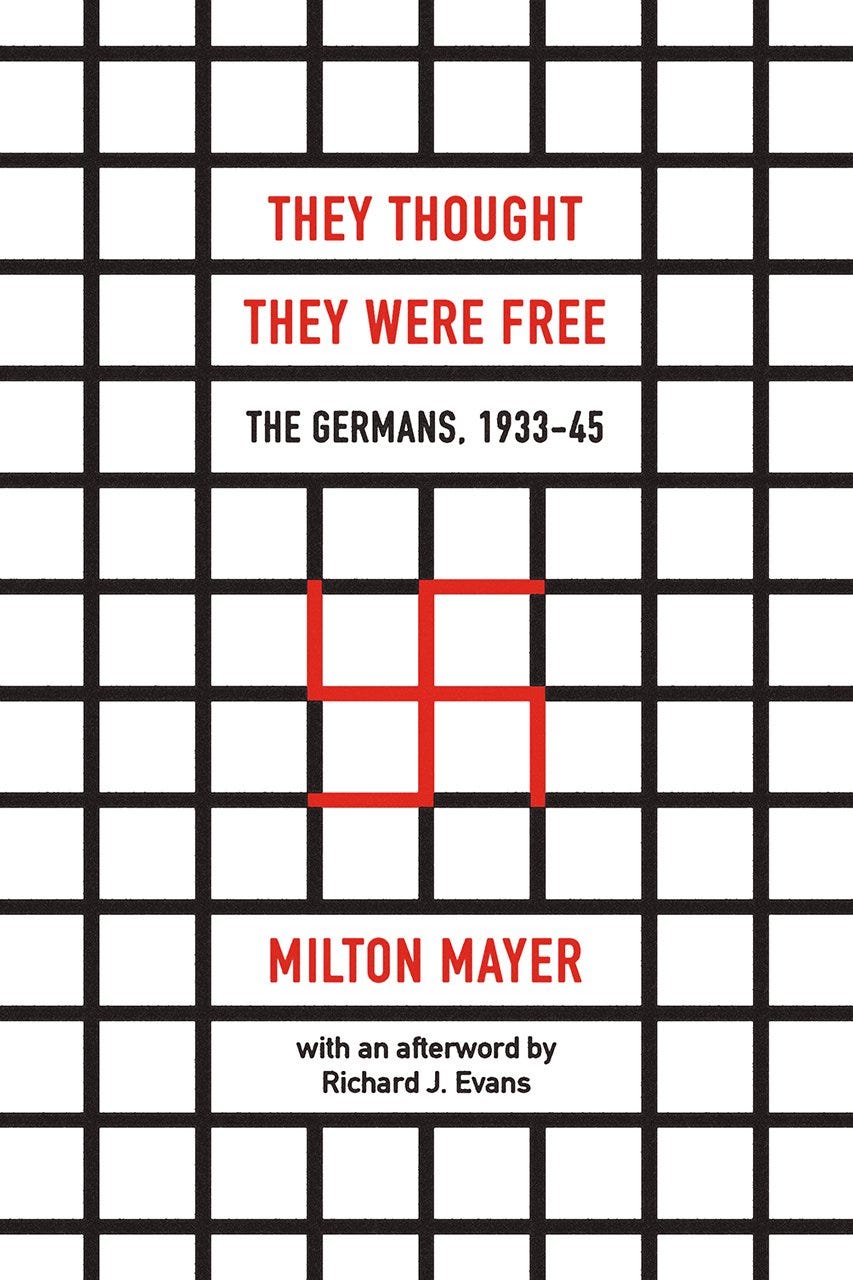
I’ve been reading an incredible book about Nazis for six months now, I find myself wanting to savor it. There is no way to make that sound better so I only ask that you trust me on our way to the point. They Thought They Were Free: The Germans, 1933-1945 by Milton Mayer was originally published in the 50s. Mayer interviewed and developed relationships with ten ordinary men who became Nazis. He sought to find out what it was that made them “go Nazi”. I’m interested in the great equalizer of propaganda, no one is immune and so, how do we resist? In reading They Thought They Were Free it is clear that the improvement of material conditions, meaning people’s ability to work, feed themselves, and afford a comfortable life remains the most powerful political tool. Populism will win you, the politician, support but we, the people, do not know how you’ll wield such power.
When Trump was reelected I spent a lot of time discussing the outcome and what would have changed it. What would sway folks to vote blue instead of red? This country is not ready to shake the illusion that either political party is “for the people” and so our choice is for the candidate that makes fascism easier to swallow. I asked my dad why he voted for Trump and he gave the same excuse he always does— he didn’t like the Dems plan for the economy. For as long as I can remember, this has been his answer. Truthfully, I don’t think he does the research he swears he does before every election. It is just now dawning on me that my dad could lie to me to save face, to avoid my disappointment. I asked him about the tariffs— something he acknowledged would be horrible for the economy— he replied he just hopes it doesn’t get too bad. He’s ignored every text I’ve sent him about politics since January.
1933, 1934, 1935, 1936, 1937, 1938, 1939—until September 1, when, as the Head of the Government told them, Poland attacked their country—the little lives of my friends went on, under National Socialism as they had before, altered only for the better, and always for the better, in bread and butter, in housing, health, and hope, wherever the New Order touched them. “No one outside Germany seems to understand this,” said an anti-Nazi woman, […] “I remember standing on a Stuttgart street corner in 1938, during a Nazi festival, and the enthusiasm, the new hope of a good life, after so many years of hopelessness, the new belief, after so many years of disillusion, almost swept me off my feet.”
-Milton Mayer
And so National Socialism improved the lives of “the average German.” They had jobs to fill their time and give them purpose, their children were receiving an education. They did not lose their homes and they got to bring their families on State sponsored vacations, something previously unfathomable. They were not told the price when they joined the party, indeed some of Mayer’s Nazi friends did not agree with the “racial stuff”, which came later. They joined a political party to save themselves and their families; they could not have known the immense cost in the beginning. But the cost is the cost whether you agree with it or not and so they did not look for the confirmation of their own corruption.
These ten Nazis—these ordinary men— cosigned a genocide enthusiastically or otherwise in the hope their lives would improve and they did, for a time. The system as it is benefits those in power but no one else and so they deflect, they lie to our faces. In a society so time-poor, so exhausted, so overwhelmed one does want to look too deeply. We used to be able to take folks at their word. The campaigns promise solutions— they promise us the conditions of our lives will change if we give them our money and our votes. But politicians are no longer interested in making our lives better, they sell us a vision of a future they do not have to make real. We, the people, are left to hope that they are telling the truth.
We humiliate ourselves with hope.
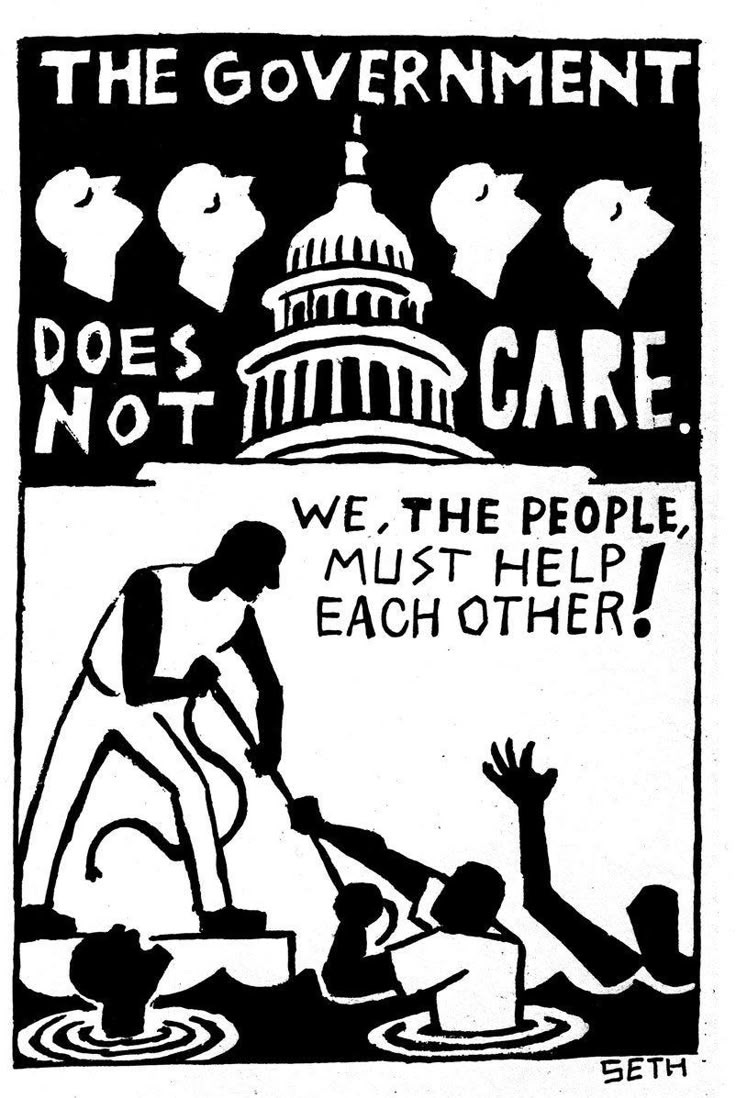

I think the shape of my Substack is changing again. Every writer, creative, social media marketer speaks to consistency as the only real path to growth. Consistency, to me, meant at least weekly. I don’t want you to forget I exist but I don’t have much to say every week. I released myself from the pressure of weekly posts, then biweekly posts. I never made my deadlines anyway and the “should” that accompanied my writing was getting me nowhere. I can promise you one per month, something like this, while I write for myself and only myself until something emerges that I feel needs to be shared. Until next time, cheers!
Loved this! Can I ask how you continue to navigate a relationship with your dad after his vote for Trump? My mom voted for Trump and she wants to be in my life but I feel so much unexpressed rage towards her because I blame her in some small way for all the harm he is doing, especially as my mom claims to be a Christian. She refuses to acknowledge that her vote was a permission for Trump to treat other humans that she supposedly is supposed to love so horrifically and instead keeps saying, "we just have to pray" and "according to the Bible we're going to all suffer", and "it's up to God now trust in Him even if what Trump does is horrible" and I just want to scream "BUT YOU CO-SIGNED THIS SHIT!"